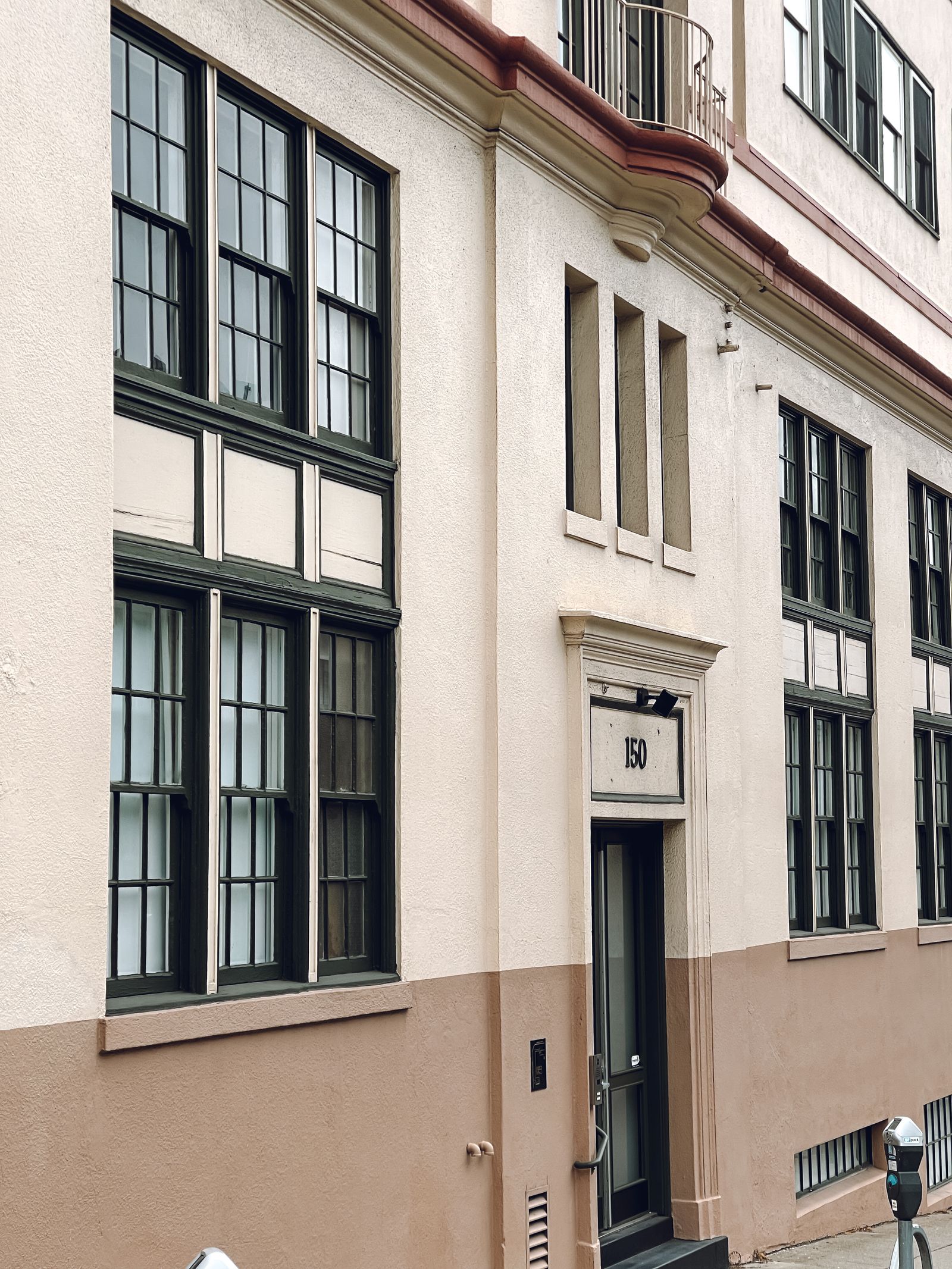
Start with the elevations Naples customers actually see
Exterior appearance is shaped by the approach, not only by the tallest wall. Property teams may be responding to green growth at a shaded side elevation, gray film around a storefront, streaks below a parapet, irrigation marks on a bright stucco column, or dirt collecting behind a canopy. Guests and tenants notice entrance columns, sign bands, sidewalk-facing walls, breezeways, garage approaches, and the areas around loading or service doors. We organize the scope by elevation and feature so a manager can decide whether the priority is a public-facing reset, a complete building wash, or a phased maintenance program.
Compatible stucco, EIFS, painted masonry, precast, coated metal, and some concrete can often be cleaned with a chemistry-led, lower-pressure process after testing and protection planning. Soft washing is not a promise to erase oxidation, failed coating, rust, efflorescence, cracked stucco, open sealant, or etched glass. Those conditions can need specialty cleaning, repair, restoration, or a referral. Naming that boundary protects the owner from approving a method that is incapable of producing the requested finish.
- Guest-facing facades, storefront surrounds, sign bands, columns, and canopies
- Compatible stucco, EIFS, masonry, precast, painted surfaces, and metal panels
- Parapets, ledges, roofline trim, breezeways, and selected upper elevations
- Defined exclusions for glass restoration, coating failure, corrosion, repairs, and loose materials
Match the method to Naples materials and staining
Naples properties often combine surfaces that look similar from the parking lot but tolerate cleaning differently. A painted stucco wall, a textured EIFS panel, a hard concrete walkway, a powder-coated sign frame, a glass railing, and a weathered joint should not receive identical pressure or dwell time. The cleaning objective matters too. Organic growth, atmospheric film, bird residue, sprinkler spotting, and embedded mineral deposits are different problems. A method that loosens biological film may not remove hard-water scale, and a pressure pass that feels effective on a sound slab can mark a coated wall or force water into a failing joint.
Before work, we look for substrate, coating, age, repair history, nearby openings, electrical fixtures, sealants, windows, and signs of water intrusion. A small test area helps when the material is uncertain, the surface has been painted, or the owner expects an even bright finish. The proposal can then separate soft wash, controlled rinse, hand detailing, contact glass work, and restoration instead of selling one technique as the answer to every condition.
Plan around Tamiami Trail, US 41, and local access patterns
Naples commercial service areas are active places. Centers near US 41 and Tamiami Trail may have narrow storefront walks, turning vehicles, delivery windows, and customers who do not expect hoses or wet pavement. A property along Airport-Pulling Road can have office traffic, medical appointments, construction activity, or landscaping crews sharing the same access. North Naples sites near Vanderbilt Beach Road, Bonita Beach Road, or Immokalee Road may have large parking fields but long hose routes and multiple tenant entrances. Old Naples and Gulf Shore Boulevard properties can add constrained setbacks, pedestrians, mature plantings, and coastal wind.
The workable plan may divide the building into zones, starting with the least occupied elevation and moving toward the primary entrance after a drying and inspection interval. We ask about tenant hours, trash pickup, deliveries, valet or patient drop-off, fire lanes, irrigation schedules, and the locations of water, drains, doors, air intakes, and electrical equipment. The quote should say which areas must be closed, where a spotter is needed, and what conditions require a pause. A clean exterior is useful only when the operation leaves the property safe and usable.
Use coastal exposure and wet-season weather to set expectations
Southwest Florida weather changes the maintenance conversation. Salt-laden air can affect exposed coastal elevations, while inland properties may show more irrigation residue, traffic film, pollen, or organic growth in shaded zones. High sun can age paint and sealants; heavy rain can redistribute soil below ledges and parapets. During the wet season, thunderstorms can compress a work window and change wind, lightning, runoff, and drying conditions quickly. A waterfront-facing wall, a covered courtyard, and a sunlit parking elevation may therefore need different review intervals even on one property.
We schedule around forecast conditions and stop when wind, lightning, public activity, drift, or water control makes the planned work unsuitable. Cleaning can improve removable soiling, but it does not correct a leak, failed flashing, corroded fastener, deteriorated coating, or damaged stucco. If washing reveals a building condition, the responsible next step may be an owner representative, facade contractor, waterproofing professional, or engineer. That distinction helps maintenance budgets stay honest and keeps appearance work from being mistaken for a building assessment.
Control rinse water before it reaches landscaping or inlets
A commercial wash is also a water-management project. Naples sites commonly combine storm drains, planted islands, irrigation heads, pavers, parking areas, curb lines, ponds, and neighboring parcels. Water can carry loosened soil and cleaning residue from a facade toward a low point even when the crew starts on an upper wall. The team reviews the route from the work face to grade, protects doors and air intakes, manages hose crossings, and confirms where water can be directed or contained.
Collier County and local municipalities may have requirements that affect discharge, stormwater protection, access, and site operations, and requirements can vary with the address and the work. We do not treat the nearest storm inlet as an automatic disposal point. The quote should identify water source, expected flow, drainage constraints, product assumptions, containment or recovery needs, and the circumstances that require a property decision before service. This is especially important near waterfront parcels, retention features, landscaped common areas, and locations where wash water could cross a public path.
- Map drains, low points, doors, air intakes, planted beds, ponds, and neighboring edges.
- Confirm water access, flow, hose routing, shutoffs, and protected pedestrian paths.
- Coordinate irrigation, deliveries, tenant notices, and traffic control before the crew arrives.
- Define weather and runoff conditions that require a pause or revised containment plan.
Treat drone assistance as one access option
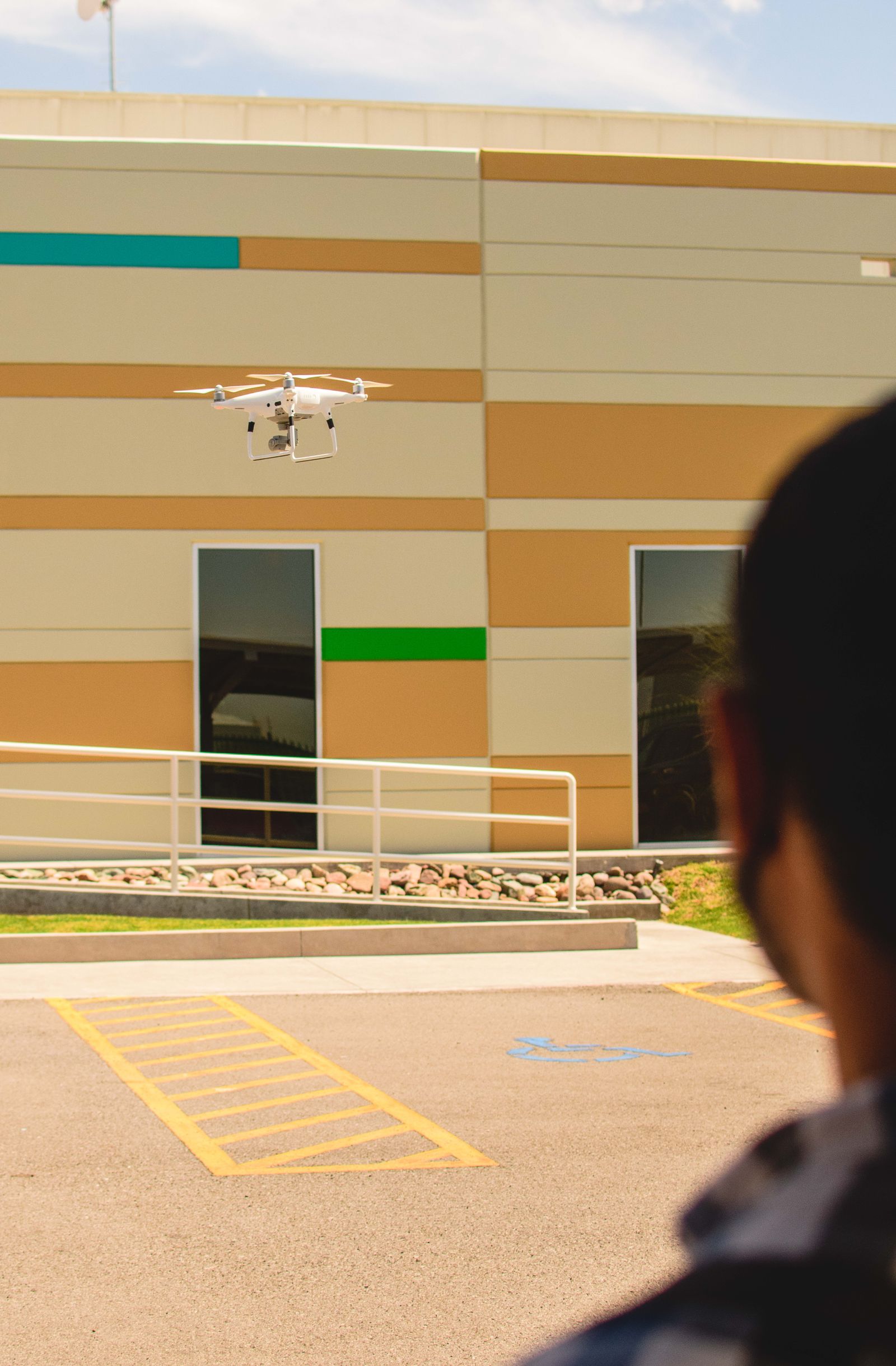
Drone-assisted application or rinsing can be useful when an upper elevation has suitable stand-off space, clear sightlines, manageable wind, and a ground plan that protects people and property. It can reduce some lift staging or help reach selected roofline and facade zones, but it is not a guarantee of uniform contact cleaning. Balconies, recesses, overhangs, tight courtyards, trees, neighboring structures, active roads, and fragile details can limit the operation. Lower walls, canopies, stubborn marks, and glass that needs hand agitation may still require direct tools.
Commercial drone work also has an airspace and operating context. The Federal Aviation Administration's Part 107 rules and any required airspace authorization are separate from owner permission. Naples sites should be screened by address, including properties near Naples Airport, surrounding heliports, dense residential edges, and public activity. If a drone plan is not appropriate, the recommendation may be a pole, lift, ground-based soft wash, phased work, or a different provider. The useful question is which method gives the property a controlled result, not which tool sounds most advanced.
Make the quote easy for an owner or facilities team to approve
A conversion-focused proposal should reduce uncertainty. It should name the surfaces and elevations included, identify the proposed method for each zone, state the intended appearance result, list exclusions, describe water and runoff assumptions, explain access and work windows, and note weather or public-traffic stop conditions. For a multi-tenant property, include the entrances, signs, canopies, and parking or loading areas that are included rather than relying on a single square-foot number.
To request a Naples assessment, send the property address, exterior photographs, approximate height, priority elevations, visible staining, surface or coating information, tenant hours, preferred dates, and any known access or drainage constraints. Include close photos of streaks, glass deposits, cracks, rust, and areas that were previously cleaned. We can then tell you whether the next step is a site review, a test area, a one-time wash, phased service, or a recurring exterior maintenance plan. The goal is a scope the property can schedule and defend, not a generic promise to make every surface look new.